

Why “Healthy Eating” Can Still Disrupt Women’s Hormones
By: Dr. Erica Brown, NMD
This post is part of our quarterly series focused on hormonal foundations and metabolic resilience. Before optimizing hormones, energy, or weight, the body first needs stability—particularly in its response to stress, nutrition, and daily rhythms. Throughout this series, we’ll explore how gentle resets, blood sugar regulation, and thyroid function work together to support balanced hormones, sustainable energy, and long-term health, especially during times of hormonal transition.
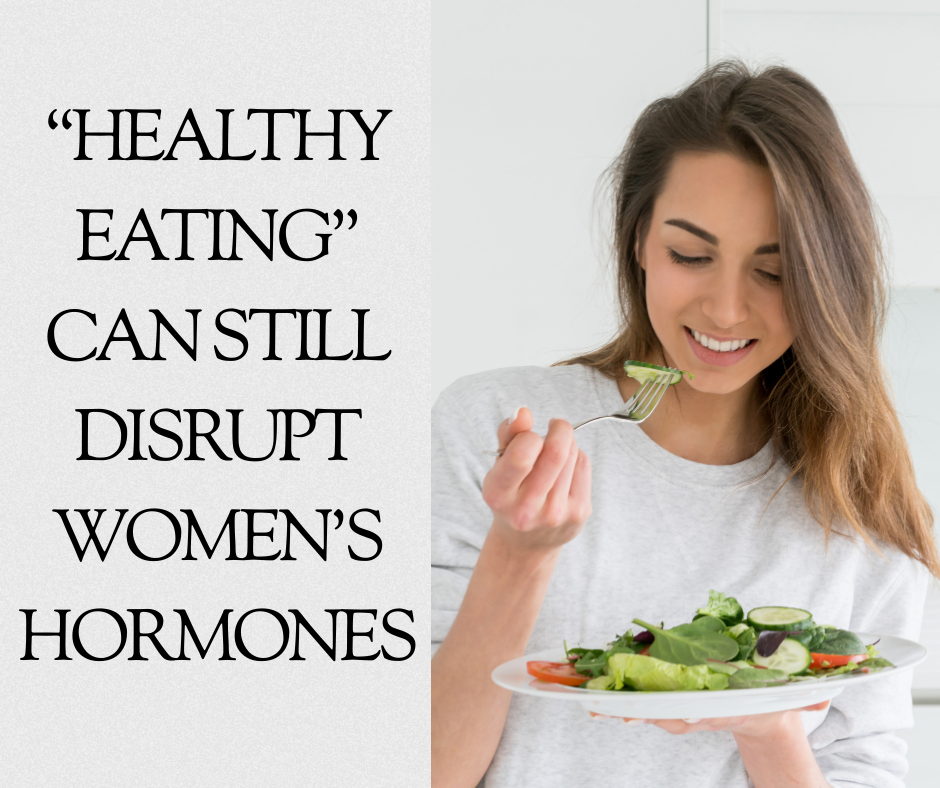
If you eat clean, avoid sugar, prioritize whole foods, and follow all the “healthy eating” rules—yet still struggle with fatigue, PMS, irregular cycles, anxiety, hair loss, or stubborn weight—this may feel deeply confusing. After all, you’re doing what you’re “supposed” to do.
But here’s an uncomfortable truth many women are never taught: undereating, skipping meals, and rigid food rules, even when well-intentioned, can quietly disrupt hormone balance. Hormones don’t just respond to what you eat. They respond to how much, how often, and how safe your body feels receiving nourishment. Let’s unpack how “healthy eating” can unintentionally impact three major hormonal systems: insulin, cortisol, and thyroid function—and why women are especially vulnerable.
Insulin: More Than a Blood Sugar Hormone
Insulin is often framed as the villain—something to “control,” “minimize,” or avoid spiking. But insulin is not just a metabolic hormone; it is a critical hormonal signal of safety and abundance. When you eat adequate carbohydrates and calories, insulin communicates to the brain and endocrine system that,
Food is available
Energy demands are being met
Reproduction, repair, and thyroid conversion are safe to support.
When insulin signaling is too low for too long, due to chronic low-carb intake, calorie restriction, or long gaps between meals, the body receives the opposite message: resources are scarce.
This can lead to suppressed ovulation, reduced estrogen and progesterone production, impaired thyroid hormone conversion, and increased stress hormone output. In other words, constantly trying to “keep insulin low” may unintentionally tell your body it’s not safe to prioritize hormones that support cycles, fertility, mood, and metabolism.
Blood Sugar, Cortisol, and the Stress Response
Skipping meals or undereating doesn’t just affect metabolism—it directly impacts the stress response. When blood sugar drops too low, the body compensates by releasing cortisol and adrenaline to raise glucose levels. This is a survival mechanism, not a flaw.
Occasional activation is normal. Chronic activation is not. For women who delay breakfast, skip meals due to busy schedules, eat very low-calorie or low-carbohydrate diets, or follow rigid fasting windows, the nervous system may remain in a near-constant state of perceived stress. Over time, elevated cortisol can:
Worsen anxiety and sleep disturbances
Contribute to cycle irregularities and PMS
Reduce progesterone production
Increase inflammation,
and interfere with thyroid hormone signaling.
This is why some women feel “wired but tired,” crash in the afternoon, or experience extreme cravings or mood swings that improve temporarily after eating. Your body isn’t lacking discipline—it’s asking for consistent fuel.
The Thyroid Connection: When Fuel Is Too Low
The thyroid gland is exquisitely sensitive to energy availability. One of the most common patterns seen with chronic undereating or restrictive diets is impaired conversion of T4 (inactive thyroid hormone) to T3 (active thyroid hormone). Instead of producing adequate T3, the body may increase production of reverse T3, a protective mechanism that slows metabolism during perceived starvation. This can result in symptoms such as:
Cold intolerance
Fatigue
Hair thinning
Constipation
Brain fog
Weight resistance despite “doing everything right.”
Importantly, thyroid labs may appear “normal” while symptoms persist, especially if only TSH is measured. For many women, the missing intervention isn’t another supplement—it’s adequate, consistent nourishment.
Estrogen, Progesterone, and Energy Availability
Reproductive hormones are not essential for survival. When the body senses insufficient energy, these hormones get downregulated first. Low energy availability—whether from calorie restriction, excessive exercise without proper refueling, or chronic blood sugar instability—can contribute to:
Luteal phase defects
Low progesterone
Missed or irregular ovulation
Worsened PMS
Loss of cycle altogether
This pattern is well-documented in conditions like functional hypothalamic amenorrhea, but milder versions occur far more commonly, and often go unrecognized
The Hidden Cost of Rigid Food Rules
Beyond physiology, rigid food rules themselves can be a form of stress. Constantly monitoring intake, fearing certain foods, or ignoring hunger cues teaches the nervous system that eating is unsafe or conditional. This can perpetuate elevated cortisol, digestive dysfunction, disordered eating patterns, and a disconnect from internal cues. Hormone health thrives in an environment of consistency, adequacy, and flexibility—not perfection.
What Supports Hormones Instead?
While every woman’s needs are individual, foundational hormone-supportive nutrition often includes:
Eating enough total calories to meet daily demands
Consistent meals (especially earlier in the day)
Including carbohydrates to support insulin signaling and thyroid function
Balanced meals with protein, healthy fats, and carbs
Reducing long fasts during high-stress seasons
Honoring hunger and fullness cues
This isn’t about abandoning “healthy eating.” It’s about expanding the definition of health to include hormonal safety, metabolic resilience, and nervous system regulation.
If you’ve been told that your symptoms are due to stress, aging, or “just hormones”---but you’re under-eating, skipping meals, or following rigid nutrition rules—it may be time to look at nourishment differently. Hormones don’t respond to willpower. They respond to signals and consistency. And consistent, adequate food is one of the most powerful signals of safety your body can receive.
Resources:
1. Loucks, A. B. (2003). Energy Availability, Not Body Fatness, Regulates Reproductive Function in Women. Exercise and Sport Sciences Reviews, 31(3), 144–148. https://doi.org/10.1097/00003677-200307000-00008
2. Rosenbaum, M., & Leibel, R. L. (2010). Adaptive thermogenesis in humans. International Journal of Obesity (2005), 34(0 1), S47. https://doi.org/10.1038/ijo.2010.184
3. Mullur, R., Liu, Y., & Brent, G. A. (2014). Thyroid Hormone Regulation of Metabolism. Physiological Reviews, 94(2), 355. https://doi.org/10.1152/physrev.00030.2013
4. Areta, José & Taylor, Harry & Koehler, Karsten. (2021). Low energy availability: history, definition and evidence of its endocrine, metabolic and physiological effects in prospective studies in females and males. European Journal of Applied Physiology. 121. 1-21. 10.1007/s00421-020-04516-0.
5. Felig P. (1973). The glucose-alanine cycle. Metabolism: clinical and experimental, 22(2), 179–207. https://doi.org/10.1016/0026-0495(73)90269-2
6. Charmandari, E., Tsigos, C., & Chrousos, G. (2005). Endocrinology of the stress response. Annual review of physiology, 67, 259–284. https://doi.org/10.1146/annurev.physiol.67.040403.120816
7. Berga, S. L., & Loucks, T. L. (2006). Use of cognitive behavior therapy for functional hypothalamic amenorrhea. Annals of the New York Academy of Sciences, 1092, 114–129. https://doi.org/10.1196/annals.1365.010