
Redefining Wellness in the Postpartum Season
By Dr. Erica Brown, NMD
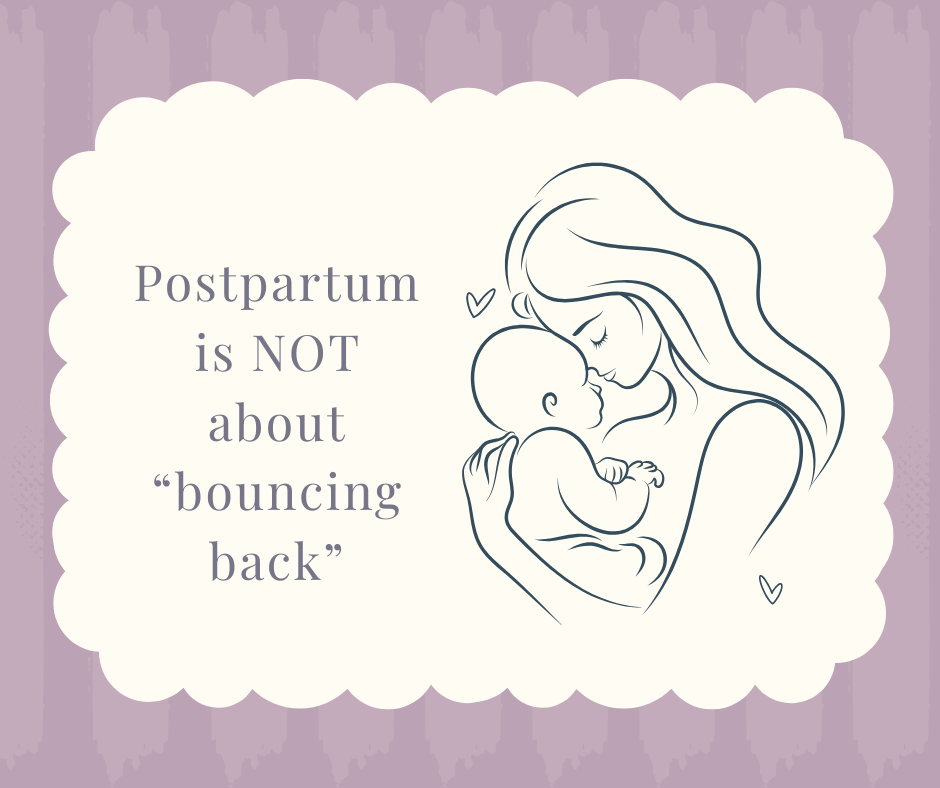
There is a phrase that quietly follows many women into motherhood:
“Bounce back.”
Bounce back to your pre-pregnancy body.
Bounce back to your old routines.
Bounce back to your energy levels, your clothes, your productivity, your workouts, your identity.
And while it may sound motivating on the surface, for many women, it creates an impossible standard during one of the most physically, emotionally, and hormonally transformative seasons of life. Because the truth is, postpartum is not a temporary detour from who you were before. It is a profound transition into someone new. Your body did not fail because it changed. Your body adapted, stretched, nourished, protected, delivered, and continues to sustain life.
Rather than asking women to “bounce back,” maybe the better question is: What would it look like to move forward feeling nourished, supported, strong, and whole?
The Pressure Women Feel After Having a Baby
Modern motherhood exists in a culture that often celebrates appearance-based recovery more than true healing. Within days or weeks postpartum, many women are flooded with messaging about:
Losing the baby weight
“Getting their body back”
Exercising intensely
Returning to work quickly
Looking rested and put together
Resuming normal productivity immediately
Social media can amplify these pressures even further. Carefully curated images of postpartum bodies, fitness routines, and “snap-back” transformations can create unrealistic expectations about what recovery is supposed to look like. Research shows that exposure to idealized postpartum content can negatively impact body image, self-esteem, eating behaviors, and mental health in new mothers.1,2,3
But postpartum recovery is not linear – and it certainly is not one-size-fits-all.
Some women feel physically strong within weeks. Others are healing from cesarean births, significant tearing, pelvic floor dysfunction, sleep deprivation, breastfeeding challenges, anxiety, depression, or birth trauma. Many are navigating all of it simultaneously while caring for a newborn around the clock.
There is no universal timeline for healing.
Your Body Was Never Meant to Stay the Same
Pregnancy changes the body on purpose.
Hormones shift dramatically. Blood volume expands. Connective tissue softens. The abdominal wall stretches. The pelvic floor carries increased pressure for months. Nutrient demands rise significantly during pregnancy and continue into the postpartum and breastfeeding period.
These physiological changes are not signs of damage. They are evidence of adaptation. And while some aspects of the body may eventually resemble pre-pregnancy patterns again, many women discover that postpartum changes remain in some form:
Different body composition
Wider hips or rib cage
Stretch marks
Changes in breast tissue
Altered skin or hair
Pelvic floor changes
A different relationship with exercise and rest
These changes do not make your body “less than.” This is your body’s story.
Research consistently shows that body dissatisfaction in the postpartum period is strongly influenced by sociocultural expectations and pressure to return to pre-pregnancy appearance quickly.1,4
The goal should not be shrinking yourself as quickly as possible. The goal should be healing well.
Supporting Your Mind and Body in the Postpartum Season
True postpartum wellness starts with support, not punishment. Instead of focusing solely on weight loss, it can be helpful to first ask:
Am I sleeping enough to support healing?
Am I eating enough protein and nutrients?
Am I hydrated?
Am I emotionally supported?
Am I moving in ways that feel restorative rather than exhausting?
Have I addressed pelvic floor or core healing?
Am I caring for my nervous system, too?
Postpartum recovery requires energy. Healing tissues, hormone regulation, milk production, sleep deprivation, and emotional adjustment all increase physiologic demand on the body. Some of the most supportive foundations during postpartum include:
1. Nourishment Over Restriction
Postpartum bodies need adequate calories, protein, healthy fats, minerals, and hydration – especially during breastfeeding. Undereating in the postpartum season can contribute to:
Fatigue
Mood instability
Blood sugar dysregulation
Hormone disruption
Increased stress response
Reduced recovery capacity
Instead of rigid dieting, focusing on balanced meals can support both healing and body composition over time. A gentle framework often includes:
Prioritizing protein at meals
Including fiber-rich carbohydrates
Eating healthy fats regularly
Supporting blood sugar stability
Staying hydrated consistently
Replenishing minerals like iron, magnesium, zinc, and omega-3 fats
2. Gentle, Progressive Movement
Exercise postpartum should support recovery – not compete with it. In the early postpartum period, healing often benefits from:
Walking
Breathwork
Pelvic floor rehabilitation
Gentle core reconnection
Mobility work
Light resistance training progression, when appropriate
But make sure you have discussed with your doctor what levels and stages of physical activity are appropriate for your body before starting any program.
Research and clinical guidance increasingly emphasize individualized, gradual return to exercise rather than aggressive postpartum fitness expectations. Movement should help you feel stronger and more connected to your body, not ashamed of it.
3. Nervous System Support Matters
Many postpartum symptoms are worsened by chronic stress and sleep deprivation. Elevated stress hormones can affect:
Mood
Blood sugar
Cravings
Inflammation
Recovery
Milk production
Hormone regulation
Simple nervous system support practices can be incredibly impactful:
Getting outside daily
Sunlight exposure in the morning
Asking for help
Limiting overstimulating content online
Prioritizing rest when possible
Creating realistic expectations
Connecting with supportive community
Healing is not only physical.
What About Weight Loss Postpartum?
Wanting to feel comfortable in your body again does not make you vain. Many women genuinely want:
More energy
Improved strength
Better metabolic health
Greater confidence
Reduced inflammation
Better-fitting clothes
Physical comfort
Those goals are valid. But healthy postpartum weight loss should never come at the expense of recover, mental health, or milk supply.
One of the biggest misconceptions is that breastfeeding automatically causes rapid weight loss. In reality, postpartum weight changes vary significantly between women due to hormones, sleep, stress, caloric intake, genetics, and metabolic adaptation.5
Some women lose weight easily while breastfeeding. Others maintain or even gain weight temporarily while lactating. Both experiences are common.
How to Support Body Recomposition Without Harming Milk Supply
If fat loss or body recomposition is a goal during breastfeeding, a slower and more supportive approach is usually best. In general, this looks like:
1. Avoiding Aggressive Calorie Restriction
Large calorie deficits may negatively affect energy levels, recovery, and potentially milk production in some women. A moderate, sustainable approach is typically safer than rapid weight loss efforts.
2. Prioritizing Protein
Adequate protein intake helps preserve muscle mass, support healing, improve satiety, stabilize blood sugar, and support body recomposition.
3. Strength Training Gradually
Progressive resistance training can support muscle rebuilding, metabolic health, bone density, posture, and energy levels. This does not need to look extreme to be effective.
4. Hydration and Mineral Support
Breastfeeding increases fluid and mineral demands substantially. Hydration, electrolytes, and adequate nourishment become even more important when increasing physical activity.
5. Supporting Sleep Where Possible
Sleep deprivation alone can significantly affect hunger hormones, insulin sensitivity, recovery, and weight regulation. While uninterrupted sleep may not be realistic with a newborn, protecting rest where possible still matters deeply.
Redefining What Postpartum Wellness Really Means
Postpartum should not be approached as a race back to who you used to be. Motherhood changes women physically, emotionally, mentally, and spiritually. And while healing, strength, and confidence absolutely matter, they do not require self-punishment.
Women deserve support that honors both their health goals and the reality of postpartum recovery.
You are allowed to care about your health and your body composition.
You are also allowed to heal slowly.
You are allowed to nourish yourself fully.
You are allowed to become someone new.
Maybe the goal was never to “bounce back.”
Maybe the goal is to move forward – stronger, wiser, softer, more resilient, and deeply rooted in what your body has accomplished.
Resources:
1. Lee MF, Bolton K, Madsen J, Burke KJ. A systematic review of influences and outcomes of body image in postpartum via a socioecological framework. Journal of Reproductive and Infant Psychology. Published online September 8, 2023:1-38. doi:https://doi.org/10.1080/02646838.2023.2252453
2. Hernández ER, Sánchez-Aguadero N, Palmero F, Recio-Rodríguez JI. Influence of social networks on self-image and lifestyle in postpartum women: a systematic scoping review. BMC Pregnancy and Childbirth. 2025;25(1). doi:https://doi.org/10.1186/s12884-025-07847-y
3. Kirkpatrick CE, Lee S. Idealized Motherhood on Social Media: Effects of Mothers’ Social Comparison Orientation and Self-Esteem on Motherhood Social Comparisons. Journal of broadcasting & electronic media. 2024;68(2):1-21. doi:https://doi.org/10.1080/08838151.2024.2324152
4. Rodrigues M, Tuany Mageste Limongi, Salzer EB, Paula A, Fernandes J, Neves CM. Postpartum Women’s Body Dissatisfaction: A Systematic Review of Theoretical Models and Regression Analyses. International Journal of Environmental Research and Public Health. 2025;22(9):1463-1463. doi:https://doi.org/10.3390/ijerph22091463
5. Donovan S, Dewey K, Novotny R, et al. Dietary Patterns during Lactation and Postpartum Weight Loss: A Systematic Review. Published online July 15, 2020. doi:https://doi.org/10.52570/nesr.dgac2020.sr0202