

Nourishing Soups with Seasonal Foods and Herbs to Support Immune Health
Written by Dr. Zan Dieker, NMD
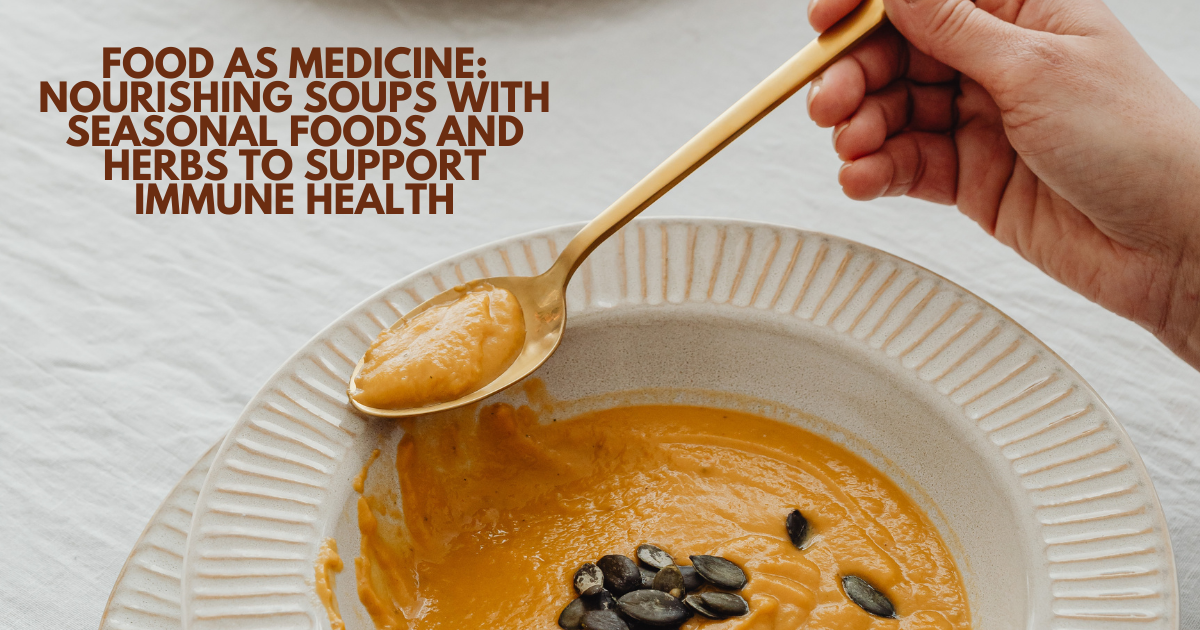
Soup season is here, and we all love the warm, hearty meals and simmering, rich aromas. Soup is more than comfort food; it can hydrate you and powerfully nourish and support your immune system. I know how busy the holiday season can be - and sometimes on-the-go meals are a necessity. We are here to make this season easier with easy meal ideas and powerful immune-supporting herbs.
Your kitchen can be a powerful tool in your immune support toolbox. As autumn turns to winter, we are drawn to warm, nourishing meals. The cooler months invite us to slow down and enjoy deeper rest, and a comforting bowl of simmering soup fits the seasonal rhythm.
Now, let’s get to the meat and potatoes: the connection between digestion and immune function. Your gut is home to a large number of your body’s immune cells. Your digestive tract is so fine-tuned for this job that it has several layers of protection. The gut microbiome plays a large role in host protection by supporting your defenses. In fact, these microbes participate in constant communication with your cells to maintain the gut barrier and support immune responses. Poor diet, stress, and antibiotics are all factors that can influence our microbiome. It’s important to understand that our immune function is not separate from our digestive system, and that is why our food matters.
We can use food to support our immune system by nourishing our gut microbiome. Beneficial microbes ferment dietary fiber and produce short-chain fatty acids. These are compounds that maintain the gut lining, regulate immune responses and inflammation, and support metabolic health. Soup is an easy way to bring these dietary fibers to the table. Foods like onions, garlic, leeks, beans, potatoes, and sweet potatoes feed the microbiome.
Our simple soup formula:
Base + protein + vegetables + herbs
Base: onions, garlic sautéed in olive oil, ghee, or butter
Liquid: your favorite broth
Protein of choice
Seasonal vegetables: carrots, sweet potatoes, butternut squash, pumpkin, kale, cabbage, and mushrooms
Herbs and spices:
Garlic: Warm and savory flavor. Crush or mince it and let it rest for 10 minutes before cooking to allow sulfur compounds to form.
Onion: Adds rich, sweet flavor. Nourishes with prebiotic fibers to support your gut microbiome.
Ginger: Enjoy warm and spicy ginger in butternut squash soup. Ginger is warming and can support some types of nausea.
Turmeric: Rich and earthy golden flavor. Sauté in olive oil, ghee, or coconut oil and add black pepper to improve absorption.
Thyme: Savory flavor, great with vegetable and chicken soups.
Oregano: Bold and savory flavor pairs well with tomato-based soups.
Rosemary: Fragrant, earthy flavor; add it to potatoes or root vegetables.
Parsley: Adds a bright finish when stirred in at the end. Contains vitamin A and vitamin C
Tip: Add woody herbs during the first 20 minutes of the simmer, then pull them out before serving. Add delicate herbs at the very end, stirring in after removal from heat.
Aim for variety, rotate your ingredients, use what you have, grow some new herbs, and have fun!
Needing more personalized support with digestive health? Schedule an appointment with Dr. Zan Dieker.
Disclaimer: Please consult with your provider regarding your personal situation. This content is for educational purposes only, not intended to diagnose, treat, or cure.